
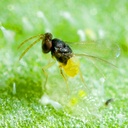
Encarsia formosa
Pack size: 15,000 pcs (250 cards × 60 ind.), cards
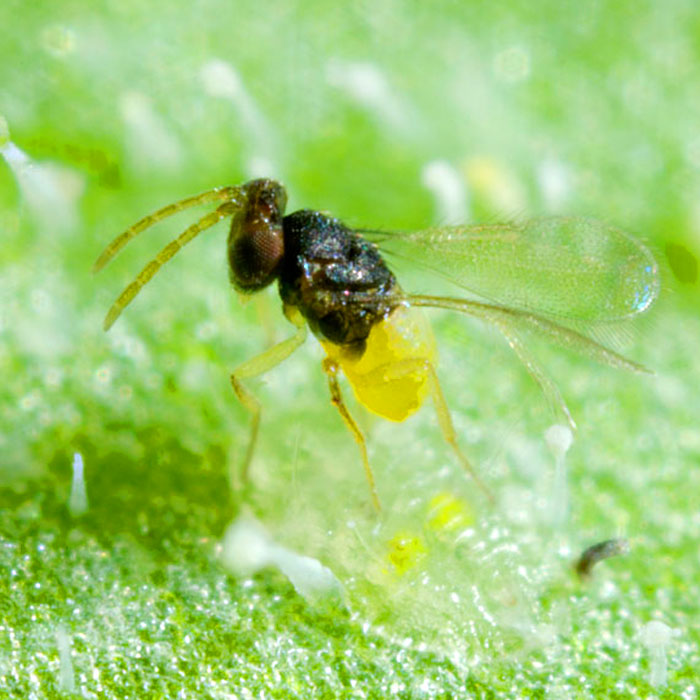
Encarsia formosa is a tiny (up to 1 mm) parasitic wasp specialised in whitefly control in greenhouse crops. The female lays eggs in whitefly larvae (about 10 per day, about 200 in her lifetime) and the parasitised larvae turn into black pupae. It develops quickly, is safe for people and animals and easy to use. For tomato, cucumber, aubergine, gerbera, melon and cabbage. Cards and vials. Produced by Bioline.
Encarsia formosa – parasitic wasp for biological whitefly control
Pack size: 15,000 pcs (250 cards × 60 ind.), cards
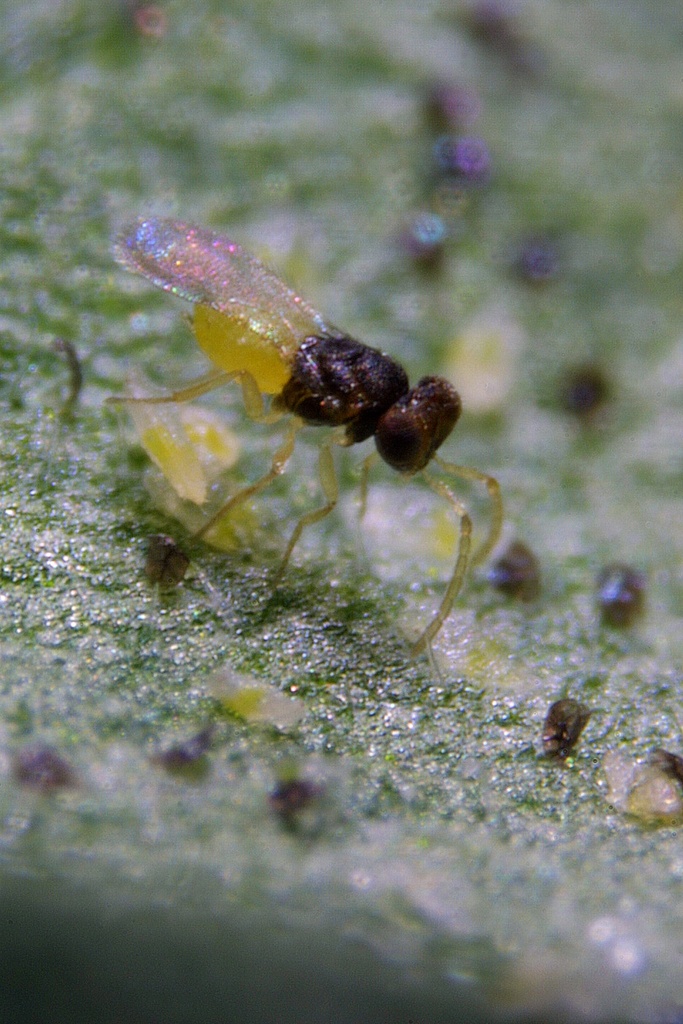
Encarsia formosa is a small hymenopteran, a specialised whitefly parasitoid used to control whitefly in greenhouse crops. The body is no longer than 1 mm; the female's head and thorax are black, the abdomen yellow. Males, entirely black, are very rare in the population.
How it works
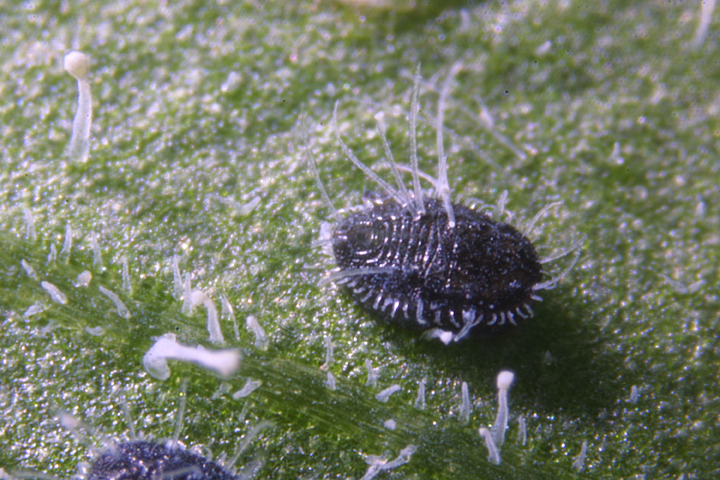
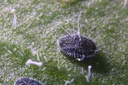
The female usually lays 10 eggs per day – one per second- or third-instar whitefly larva (it prefers the third and fourth nymphal instars), about 200 eggs in her lifetime. The larva parasitises the whitefly larva for about 10 days at 20–25 °C; around day 6 it kills the host, forming the characteristic black pupa with a round exit hole. Adults also feed on the haemolymph of punctured whitefly larvae. Encarsia attacks all whitefly stages except the egg and the adult.
Crops
Tomato, cucumber, aubergine, gerbera, melon, cabbage and other protected crops – vegetables and ornamentals.
Life cycle and temperature
The full cycle takes about 28 days at 21 °C. Development from egg to adult: 32 days at 16 °C, 21 days at 23 °C, 15 days at 26 °C. Adults are most active during the first 10 days and live up to 30 days under optimum conditions. Optimum conditions: 25–30 °C and 50–70% humidity; above 30 °C longevity drops markedly.
Key advantages
- speed of action – no long time needed to build a population,
- ecological safety – harmless to people and animals,
- easy to transport and apply on various plants,
- regulates whitefly populations, especially when Macrolophus has not had time to multiply.
Application
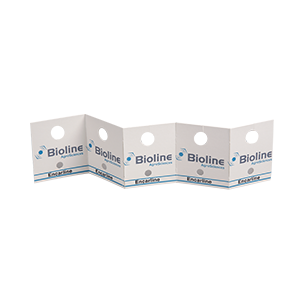
In protected crops introduction should start before the whitefly appears: cards with mummified nymphs are hung over the whole greenhouse area, repeated twice at an interval of 1.5–2 weeks. On average about 4 individuals per m² are used. Application is considered effective when parasitisation reaches about 40% of the whitefly population. Adult wasps detect pest larvae from up to 20 m away; higher temperature and good light favour them.
- Preventive rate: 0.1 card/m² before adult whiteflies appear and 0.2 card/m² after the first signs of the pest. When 90% of the pupae on a leaf are black, reduce the rate.
- Rate for controlling hotspots: 15–30 ml/m² per week. At a very high whitefly population (sticky, stiff leaves) do not use Encarsia.
Packaging and storage
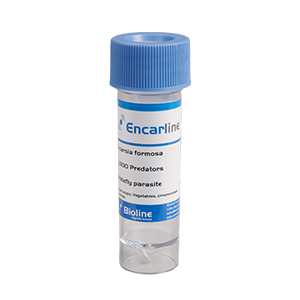
Card of 50 (3,000 individuals), card of 100 (6,000 individuals), card of 250 (15,000 individuals), 30 ml vial (10,000 individuals). Protect from direct sun, store in a cool place at 5–10 °C, use within 18 hours of receipt.