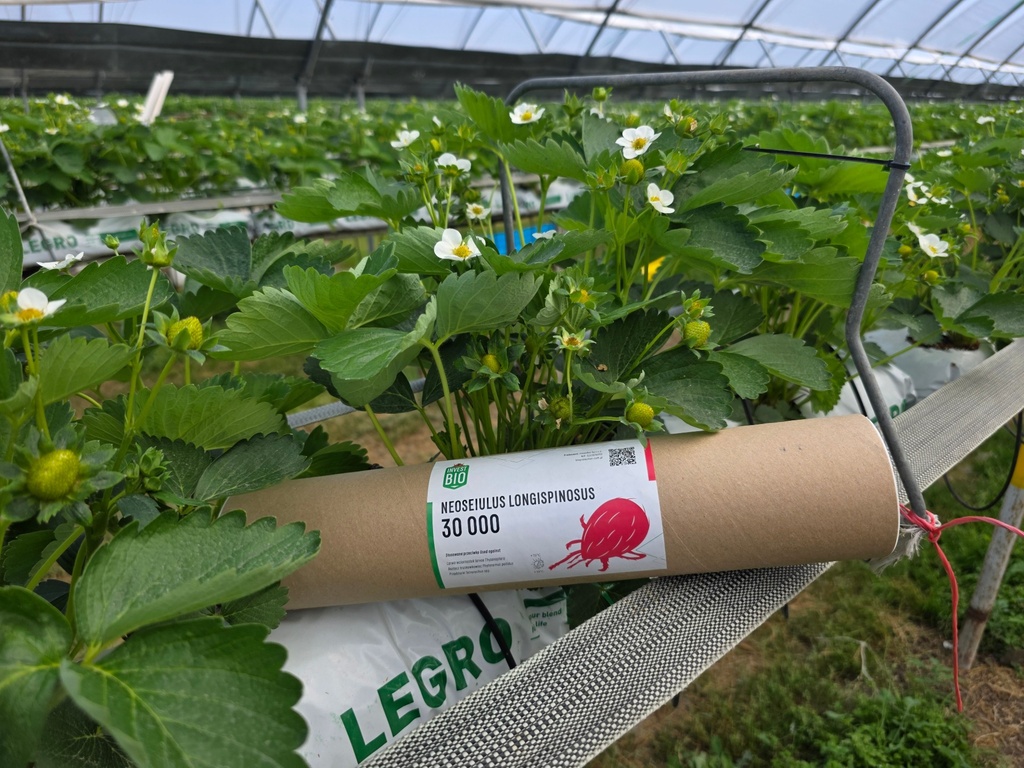
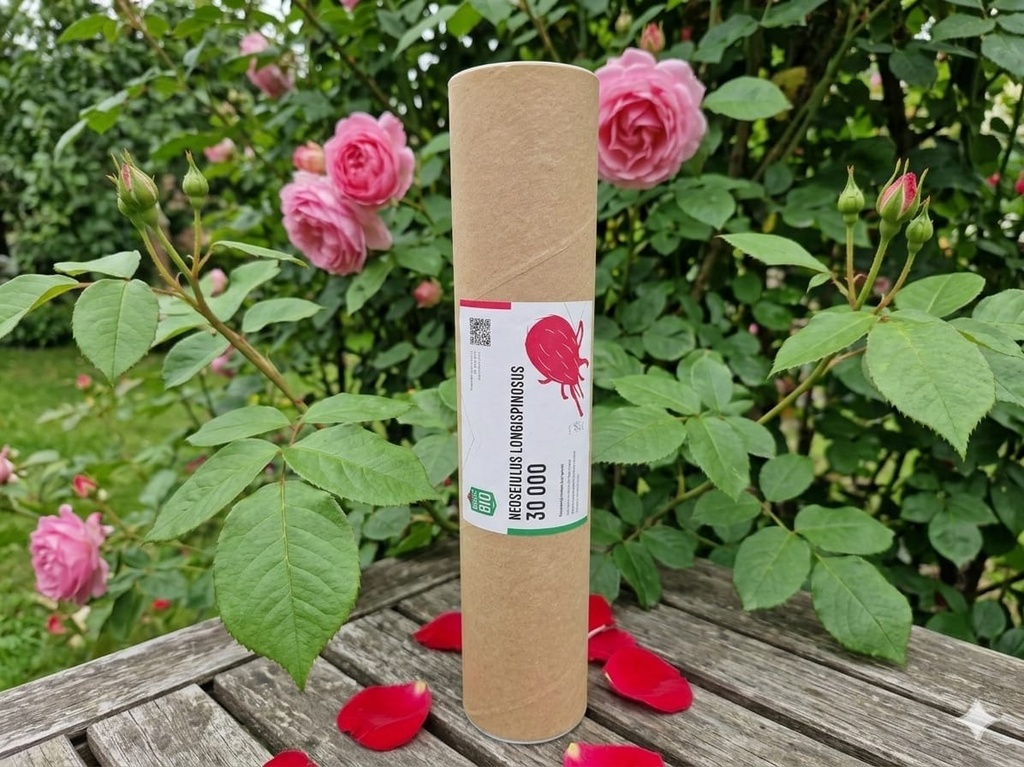
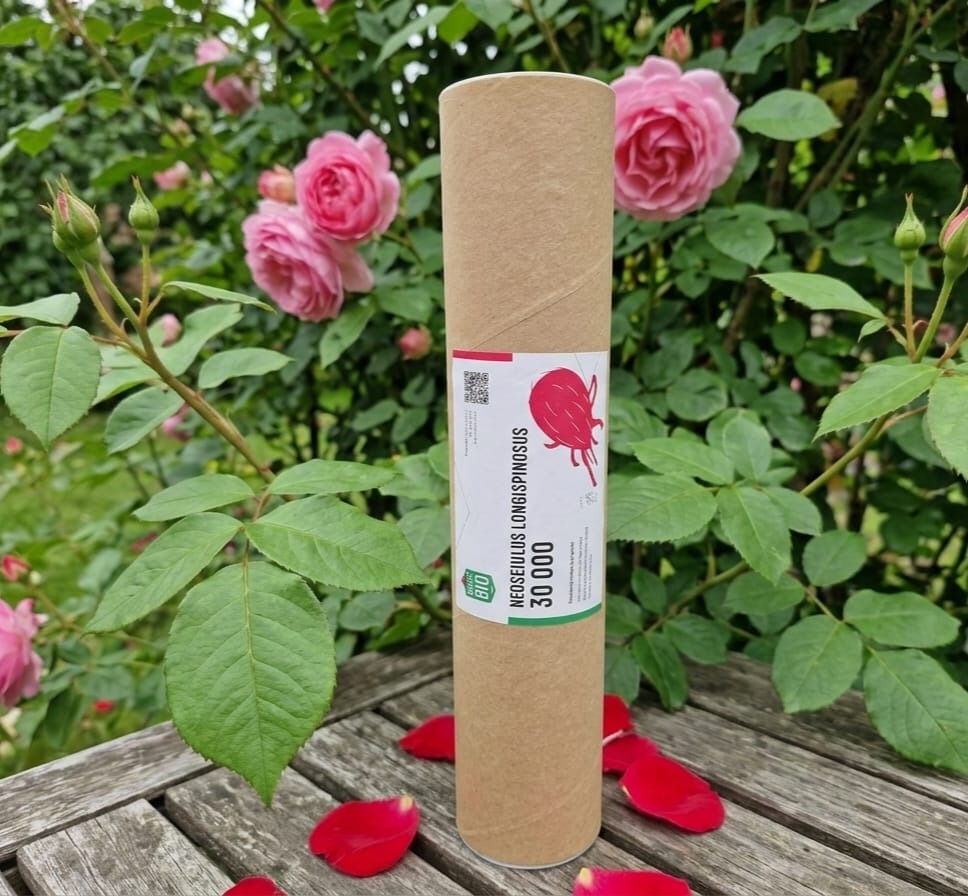
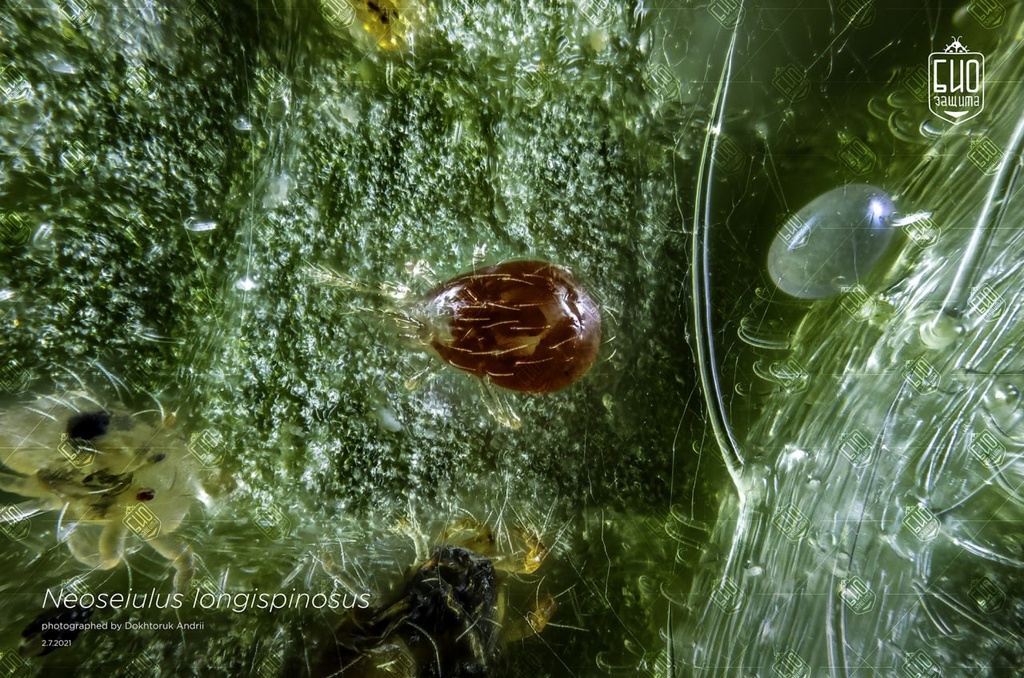





Neoseiulus longispinosus
Pack size: 30,000 pcs, tube
Neoseiulus longispinosus is a predatory mite adapted to living in dense spider mite webbing and to working at high temperatures – females hunt and lay eggs even at +35 °C. A female destroys about 20 spider mite larvae per day. It controls spider mites of the genus Tetranychus, Panonychus citri, Eotetranychus and Aponychus. For cucumber, aubergine, pepper, rose, gerbera, chrysanthemum, strawberry, raspberry, blackberry, currant and grapevine. Produced by Bioproduction.
Neoseiulus longispinosus – predatory mite against spider mites for hot greenhouses
Pack size: 30,000 pcs, tube
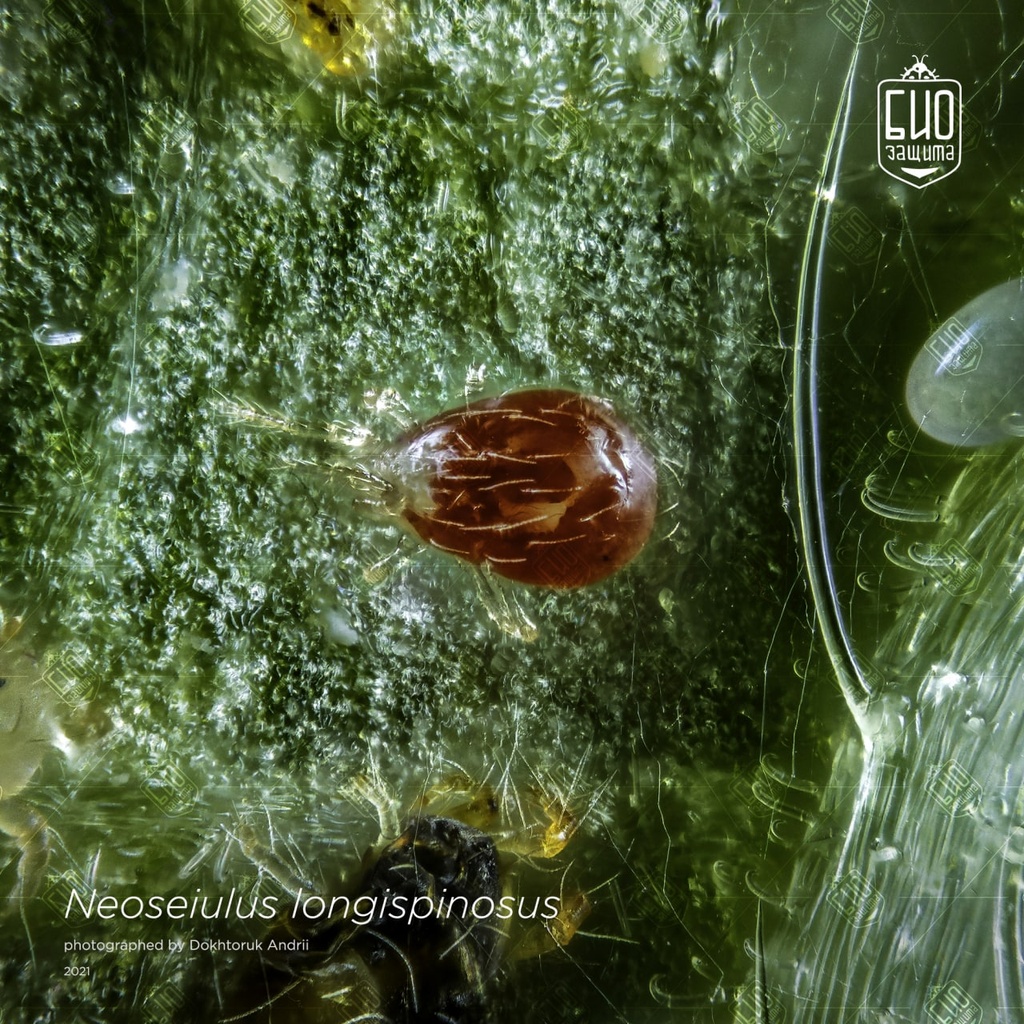
Neoseiulus longispinosus lives in high-temperature conditions in South Asian countries, India, China, Pakistan, Australia, Thailand and the Dominican Republic. The female's body changes colour with age and diet – from milky white through pale pink and light red to dark red; the male is much smaller and straw-coloured.
Target pests
All spider mite species of the genus Tetranychus, Panonychus citri (citrus red mite), Eotetranychus cendanai, Aponychus corpuzae. The female's average daily activity against spider mite larvae is 20 individuals, the male's 12. Recommended predator-to-spider-mite ratio 1:100.
Crops
Cucumber, aubergine, pepper, rose, gerbera, chrysanthemum, strawberry, raspberry, blackberry, currant, grapevine and other crops; in the open field also tomato, cucumber, soybean and orchards.
Life cycle and temperature
Egg – larva (3 pairs of legs) – protonymph – deutonymph – adult. Development from egg to adult takes about 3 weeks at 15 °C and about 5 days at 27–35 °C.
Key advantages
- outperforms many phytoseiid species in demographic parameters,
- adapted to living in dense spider mite webbing,
- ideal for greenhouses with high summer temperatures and for field crops,
- females work and produce offspring for 7–10 days at +35 °C.
Application
Release rate on plants: 10 individuals; predator : spider mite ratio 1:100.
- Preventive rate: 10 individuals/m² once a month.
- Rate for controlling pest hotspots: 50 individuals/m² per week.
Packaging and storage
250 ml plastic bottle – 2,000 mites; 1 l tube – 10,000 mites. Short-term storage: 8–10 °C in a cold room; long-term: 10–15 °C in a refrigerator (population survival gradually declines).