
Amblyseius swirskii
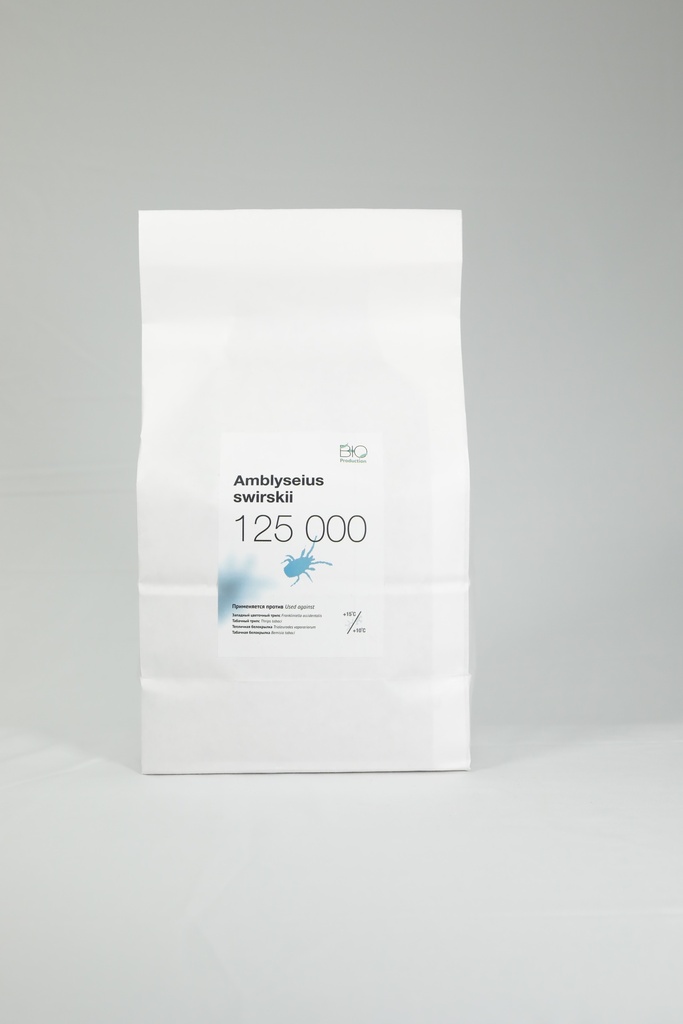
Pack size: 125,000 pcs, bag
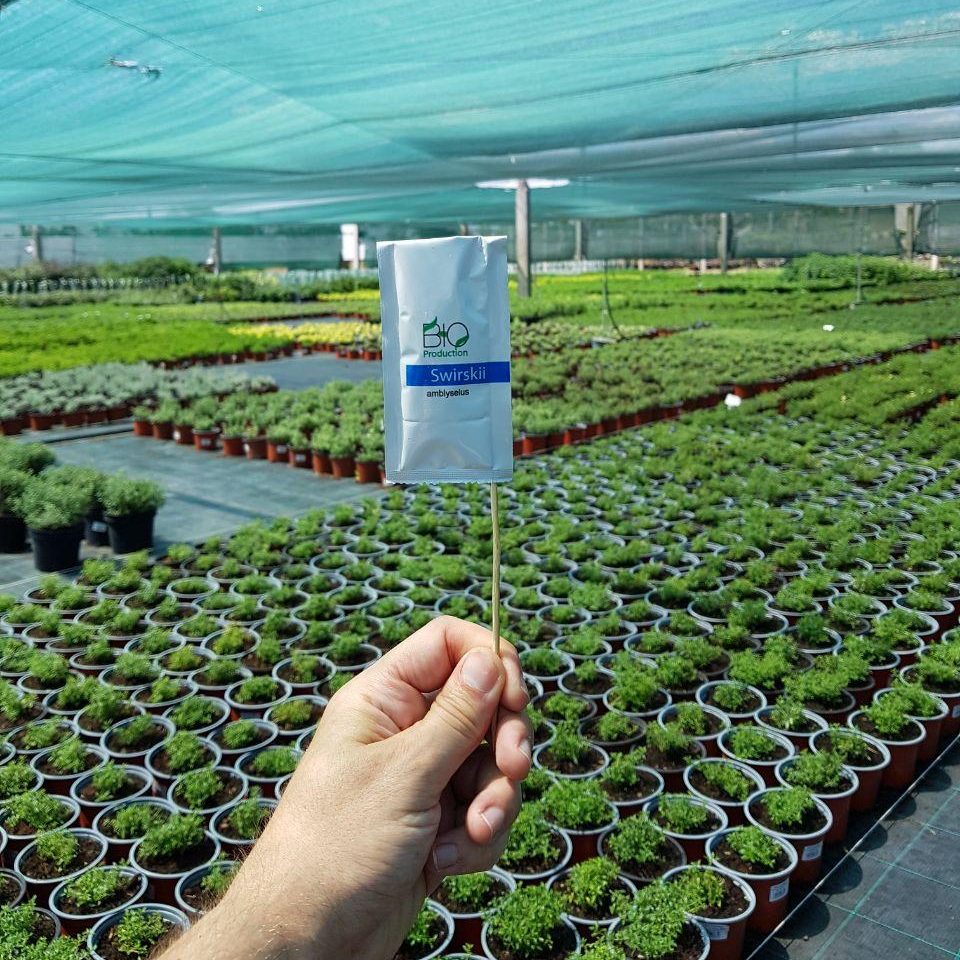
Amblyseius swirskii is a predatory mite of the family Phytoseiidae that controls thrips (2–6 per day) and greenhouse whitefly (15–20 eggs or 10–15 larvae per day). It acts quickly, tolerates low air humidity and can be spread directly onto plants or applied in sachets. Safe for the environment and people. For pepper, cucumber, aubergine, rose and gerbera. Produced by Bioproduction.
Amblyseius swirskii – predatory mite against thrips and whitefly
Pack size: 125,000 pcs, bag
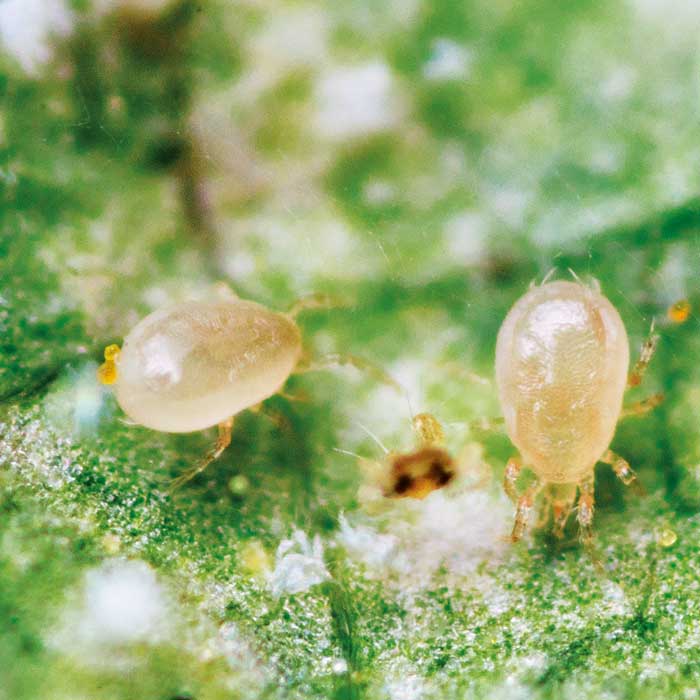
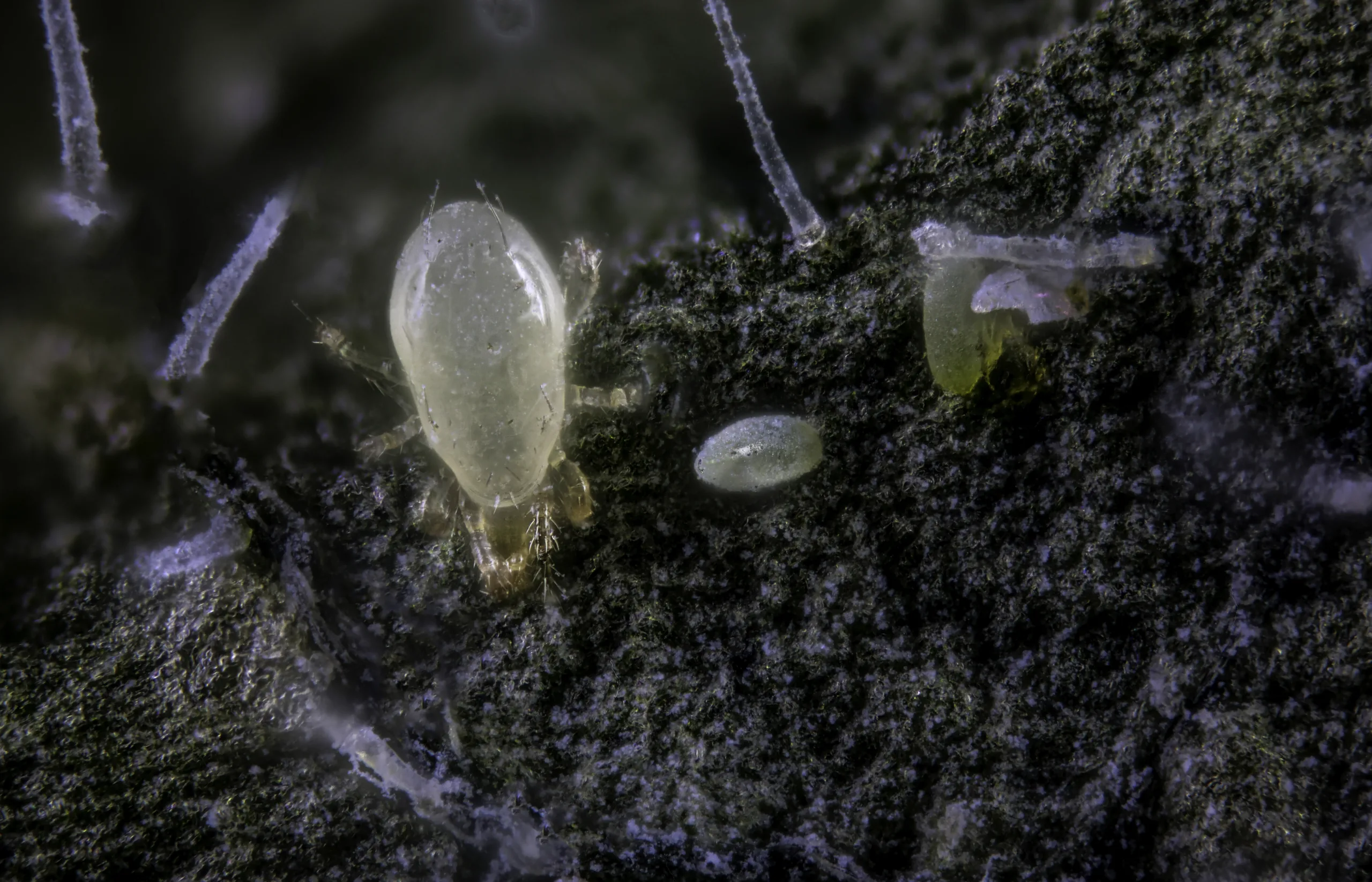
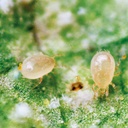
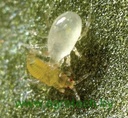
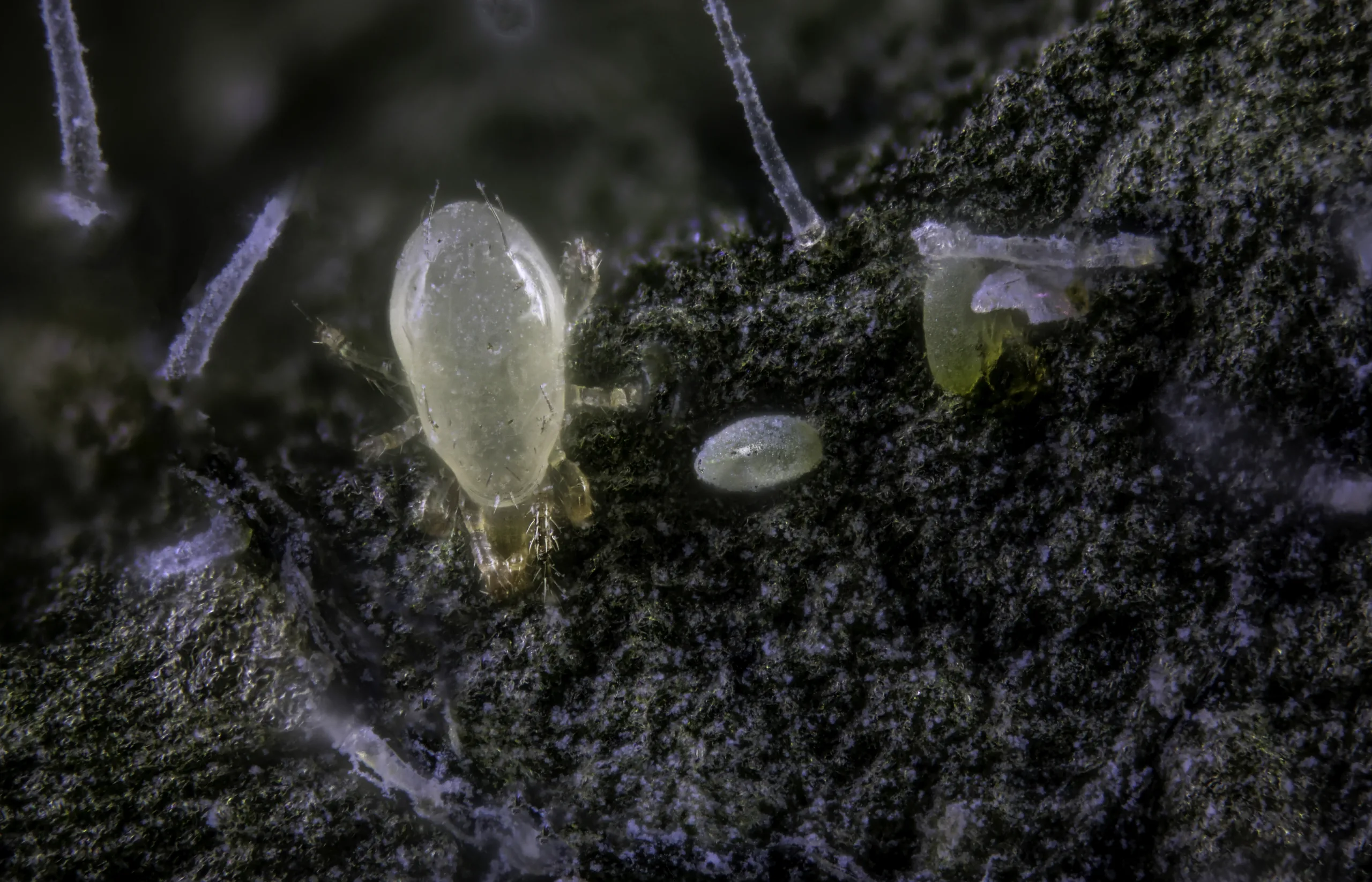
Amblyseius swirskii belongs to the family Phytoseiidae and can be used on various crops and under various conditions. Larvae and adults are active hunters living on the plants. The female has a pear-shaped body about 0.6 mm long, beige (pale yellow to light brown depending on the food); males are slightly smaller (up to 0.45 mm).
Target pests
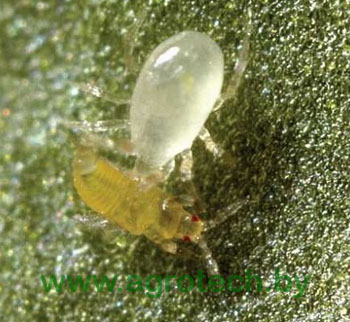
When feeding on thrips it prefers the first larval instar – the female eats 2–6 thrips per day. When greenhouse whitefly is present it prefers whitefly: 15–20 eggs or 10–15 young larvae per day. When prey is absent, pollen is an alternative food source.
Crops
Pepper, cucumber, aubergine, rose, gerbera and other crops.
Life cycle and temperature
Egg – larva – protonymph – deutonymph – adult. Females lay eggs on the underside of leaves between the veins. Total development time: 23.5 days at 15 °C, 10.9 days at 20 °C, 7.0 days at 25 °C, 6.0 days at 30 °C, 6.9 days at 35 °C.
Key advantages
- acts quickly and effectively – reduces the pest population in a short time,
- reliability – tolerates stress such as low air humidity,
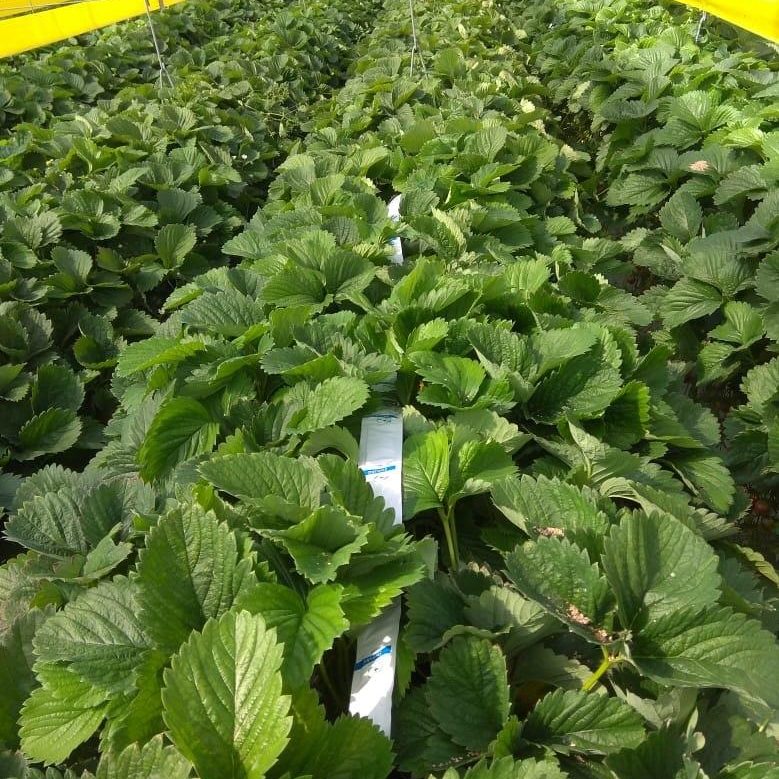
- ease of use – spread directly onto plants or applied in sachets,
- safe for the environment and people – no chemicals and no residues on plants or in the soil.
Application
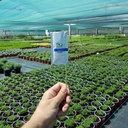
Local method ("living insecticide"): when the pest population is growing or to colonise young plants quickly, the loose material from the tube or pack is spread evenly on the plants – weekly or every 2 weeks at 50–100 individuals/m² for 3–8 weeks; compatible chemicals can be used in parallel.
- Preventive rate: 1 sachet/m² once a month.
- Rate for controlling pest hotspots: 100 individuals/m² per week.
Packaging and storage
1 l tube – 25,000 or 50,000 mites; 5 l paper bag – 125,000 or 250,000 mites; foil or paper sachets with cardboard closure – box of 500 sachets of 250 or 500 individuals; LifeLine – 50 m tape. Keep away from sunlight at 8–12 °C, use within 18 hours of receipt.